rebar exports are not limited to purchasing the product from a mill and shipping it to the destination country. Selecting the right manufacturer, checking the rebar’s standards and grade, calculating the export price, understanding customs tariffs, transportation costs, potential export duties, destination market conditions, and foreign currency settlement procedures all play an important role in determining the final profitability of rebar exports.
Rebar exports are one of the important segments of Iran’s steel products trade. Due to Iran’s high production capacity, access to regional markets, and relative price advantages, rebar exports have always attracted the attention of manufacturers, traders, and international buyers. Iranian export rebar is supplied to markets such as Iraq, Turkey, Armenia, Afghanistan, Georgia, Azerbaijan, Oman, and several other Asian and regional countries.
However, rebar exports are not limited to purchasing the product from a mill and shipping it to the destination country. Selecting the right manufacturer, checking the rebar’s standards and grade, calculating the export price, understanding customs tariffs, transportation costs, potential export duties, destination market conditions, and foreign currency settlement procedures all play an important role in determining the final profitability of rebar exports.
In this article by Tisa Tamin, we examine the most important aspects of rebar exports, including export rebar prices, export requirements, tariffs and duties, manufacturers, and target markets.
For price inquiries, sales terms, and any consultation, please contact our experts.
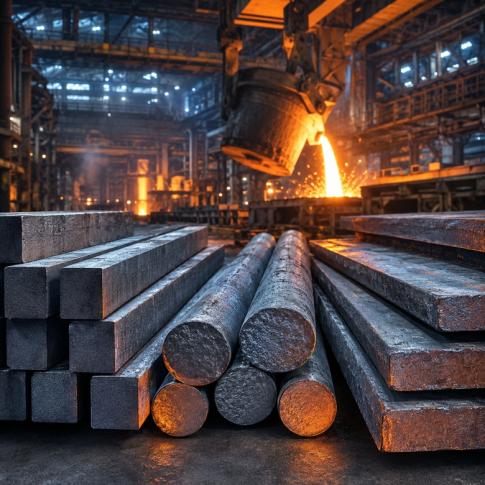
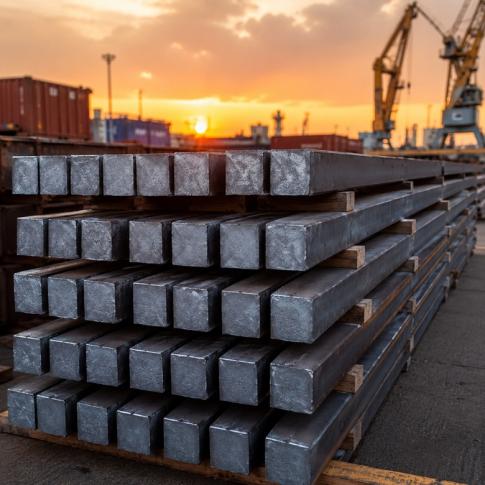
Export rebar refers to steel reinforcing bars that are produced, supplied, and prepared for international markets in accordance with the technical specifications, standards, and requirements of the destination country.
In the export market, simply offering a low rebar price is not enough. International buyers typically pay attention to factors such as:
Rebar standard and grade
Chemical analysis and mechanical properties
Bar diameter and length
Product weight and tolerances
Surface quality and rebar rib pattern
Packaging and bundling
Manufacturer’s name and reputation
Quality documents and certificates
Delivery terms
Transportation costs and delivery time
Therefore, export rebar must not only have a competitive price but must also meet the quality and documentation requirements of the destination market.
Iran is considered one of the major steel producers in the region. The presence of numerous steel product manufacturers, access to raw materials, and the country’s favorable geographical position have created significant potential for steel product exports.
One of the most important advantages of Iranian rebar exports is relatively convenient access to neighboring countries. Overland transportation to some regional markets can provide time and logistical advantages compared with sourcing products from more distant manufacturers.
In addition, the availability of sea transportation from Iran’s southern ports has made more distant markets worth considering for some exporters.
One of the important issues when exporting rebar is correctly determining the HS Code, or customs tariff code, of the product.
For steel reinforcing bars containing indentations, ribs, grooves, or other deformations produced during rolling, the tariff code 72142000 is used in the classifications applied in Iran. This code has also been used in trade data related to Iranian rebar exports.
However, exporters should not proceed solely based on the commercial name of the product. The exact product specifications, type of steel, product form, and current customs regulations should be verified before customs declaration.
Export tariffs and duties are among the factors that can directly affect the final price and profitability of rebar exports.
It is important to note that export tariffs, export duties, import duties in the destination country, and other customs costs should not be confused with one another.
For example, costs that may arise in an export transaction include:
Iranian export duties or charges, if applicable
Customs and declaration costs
Standards and inspection costs
Loading costs
Domestic transportation costs
International transportation costs
Insurance costs
Customs clearance costs in the destination country
Import duties and taxes in the destination country
Therefore, before finalizing the price, current export regulations as well as the import regulations of the destination country should be reviewed.
Since regulations governing steel product exports may change, the export duty rate for rebar should not be considered a fixed and permanent figure.
One of the most frequently asked questions among exporters is, “How much is the export duty on rebar?”
The answer depends on the regulations in effect at the time of export, the tariff code, the type of product, and the country’s trade policies. Therefore, the current regulations should be checked for each shipment.
On the other hand, even if a product is not subject to a specific export duty at the time of the transaction, the exporter must still account for other costs such as transportation, customs, inspection, loading, insurance, and costs related to foreign currency obligations.
As a result, when calculating the actual profit from rebar exports, the entire chain of export-related costs should be taken into account rather than focusing on a single expense.
The export rebar price is not a fixed figure and is generally determined based on a combination of factors.
The most important factors include:
The price of steel billets is one of the main factors affecting the final cost of rebar. An increase in billet prices generally puts upward pressure on rebar prices.
The global steel market also affects export prices. Exporters should compare their product prices with those offered by competitors in the destination market.
Since export transactions are generally conducted in international currencies, exchange rates and currency conversion costs can have a significant impact on the profitability of a transaction.
The manufacturer’s brand, product quality, production standards, and reputation in the destination market can result in price differences between different export rebar products.
Rebar manufactured according to a customer’s required standard may have a different price from products manufactured according to other specifications or standards.
The cost of delivering rebar to Iraq cannot be compared directly with the cost of shipping it to a more distant market.
EXW, FCA, CPT, CFR, CIF, and other delivery terms involve different costs and responsibilities.
Therefore, when comparing two export prices, it is important to first determine the delivery location and transaction terms associated with each price.
The price of Iranian export rebar changes on a daily or periodic basis. To provide an accurate price, factors such as diameter, grade, manufacturer, tonnage, destination, and delivery terms must be specified.
Published examples from the Iranian market during 2026 have reported prices in the range of approximately USD 530 per ton for certain sizes and transaction conditions, while other quotations have reported prices of around USD 430 to USD 435 per ton for ex-works transactions. This difference demonstrates that stating a single price for “Iranian export rebar” without specifying the transaction terms can be misleading.
Therefore, for purchasing or selling rebar in bulk, it is better to request a quotation based on the exact order specifications.
Rebar export profit depends on the purchase price, selling price, transportation costs, duties, customs expenses, financial costs, exchange rates, and transaction terms.
In simple terms, gross profit can be considered as follows:
Export Profit = Export Sales Value − Total Purchase, Preparation, and Export Costs
For example, if an exporter purchases rebar from a manufacturer at a specific price, they must also calculate the following costs in addition to the purchase price:
Transportation from the mill to the border or port
Loading costs
Customs costs
Inspection costs
Insurance
International transportation costs
Financial and banking costs
Costs related to foreign currency repatriation
Potential costs in the destination market
For this reason, the difference between the purchase price and selling price does not necessarily represent the exporter’s actual profit.
Direct and competitive purchasing from the manufacturer, selecting the right market, managing transportation costs, selling in large volumes, identifying genuine buyers, and preparing appropriate contracts are among the most important factors that can increase rebar export profitability.
Wholesale export rebar sales are generally carried out for construction projects, trading companies, steel distributors, contractors, and importers of steel products.
In wholesale transactions, the following specifications should generally be determined from the beginning:
Rebar type
Size
Grade
Standard
Manufacturer
Order quantity
Loading location
Destination
Delivery terms
Packaging type
Preparation time
Payment method
Inspection and quality control requirements
For export orders, direct sourcing from the manufacturer or through a reliable supplier network can help reduce intermediary costs and improve competitiveness in the destination market.
Iran has numerous rebar and steel section manufacturers, and some of their products are suitable for supply to international markets.
Some of the well-known names in Iran’s rebar export market include:
Esfahan Steel Company (ESCO)
Khorasan Steel Complex
Azarbaijan Steel Company
National Iranian Steel Industrial Group
Kavir Steel
Bafgh Steel
Mianeh Steel
Shahroud Steel
Anahita Gilan Steel
And other reputable manufacturers
However, determining whether a particular manufacturer is suitable for export should not depend solely on the brand name. The product’s technical specifications, required customer standard, supply capacity, price, delivery time, and transportation conditions should also be evaluated.
In some markets, buyers may prefer a specific brand, while in other transactions, competitive pricing and compliance with technical specifications may be more important.
Iraq is one of the most important regional markets for Iranian steel products. Its geographical proximity, availability of overland transportation, and demand from the construction market have made Iraq one of the key markets worth considering for rebar exporters.
Rebar exports to Iraq can generally be carried out through land routes, and the choice of border crossing depends on the final destination, transportation route, market conditions, and the buyer’s location.
Some of the important border crossings and routes in overland trade between Iran and Iraq include:
Parvizkhan
Bashmaq
Khosravi
Mehrān
Shalamcheh
The price of rebar exported to Iraq depends not only on the product price but also on transportation costs to the border or final destination, delivery terms, exchange rates, customs costs, and market conditions in Iraq.
Market reports also indicate that the price of Iranian rebar in the Iraqi market changes over time, with transportation costs, tariffs, and global steel prices being among the factors affecting the final price.
Turkey is one of the major steel producers in the region. Therefore, entering the Turkish market with Iranian rebar can be more competitive compared with markets that are more dependent on imports.
When exporting rebar to Turkey, factors such as the following should be carefully evaluated:
Competitors’ prices
Standards accepted by the buyer
Product quality and chemical analysis
Transportation costs
Import requirements
Trade tariffs
Payment terms
Potential market restrictions
Foreign trade data have also recorded exports of rebar under HS Code 72142000 from Iran to Turkey.
Therefore, Turkey can be considered a potential export market, but success in this market depends above all on competitive pricing, quality, compliance with standards, and a precise understanding of the customer.
The Caucasus countries can also be considered potential markets for Iranian steel product exports due to their geographical proximity.
Iranian rebar trade data have also recorded exports under HS Code 72142000 to countries such as Armenia, Georgia, and Azerbaijan.
For these markets, overland transportation costs, delivery speed, standards accepted by the buyer, and the final delivered price are particularly important.
Persian Gulf markets can also be considered for rebar exports, particularly in transactions where cost-effective sea transportation is available.
In these markets, comparing Iranian rebar prices with those offered by manufacturers and exporters from countries such as Turkey, China, and other regional suppliers is highly important.
Iran’s main advantages in some transactions may include competitive pricing and favorable geographical access. However, sea freight costs, insurance, standards, and the import requirements of the destination country must be included in the final price.
Exporting rebar requires a series of commercial, customs, and logistics procedures to be completed.
In general, the export process includes the following steps:
The destination country and target customer should first be identified.
The standard, grade, size, bar length, packaging, and other technical specifications should be determined according to the buyer’s requirements.
The purchase price of the rebar and the manufacturer’s supply capacity are determined.
Purchase, transportation, customs, insurance, inspection, and other related costs are calculated.
The proforma invoice should include detailed product specifications, tonnage, price, delivery terms, preparation time, and payment conditions.
After both parties reach an agreement, the contract is prepared according to the transaction terms and the payment method is determined.
The rebar is sourced from the manufacturer and, when required, inspection and quality control are carried out.
The goods are declared to customs, the required documents are submitted, and customs procedures are completed.
After the goods leave customs, the shipment is transported to the border, port, or final destination according to the contract.
The exact documents required may vary depending on the type of transaction, destination, and export conditions. However, commercial and transportation documents are generally required for rebar export transactions.
These may include:
Commercial invoice
Packing list
Proforma invoice
Customs documents
Certificate of origin
Shipping documents
Certificate of analysis and quality control documents, if requested
Sales contract
Insurance policy, if agreed upon
Other permits or documents required by the destination country
It is important to verify the required documents before loading and based on the current regulations of both Iran and the destination country.
The required standard for export rebar depends on the target market and the buyer’s requirements.
Some buyers may require international standards or the national standards of their own country. Therefore, before purchasing, it should be confirmed that the manufacturer’s product complies with the customer’s required standard.
In many export transactions, providing a Mill Test Certificate (MTC) or a certificate containing the product’s chemical analysis and technical specifications is also important.
The transportation method for rebar depends on the distance, tonnage, transportation infrastructure, and terms of the contract.
For neighboring countries such as Iraq, Armenia, Azerbaijan, Turkey, and Afghanistan, land transportation is one of the main options.
For more distant destinations, sea transportation can be a more suitable option, especially when the order volume is large.
On some international routes, rail transportation can also be considered as an option for reducing costs or increasing transportation capacity.
The transportation method should be selected based on the final delivered price to the customer, rather than simply choosing the lowest freight rate.
For accurate pricing, it is better to divide the total price into several components:
- Rebar purchase price from the manufacturer
- Preparation and loading costs
- Domestic transportation costs
- Customs and export-related costs
- International transportation costs
- Insurance and inspection costs
- Other costs
The exporter should then add the desired profit margin to this amount.
This makes it possible to calculate an appropriate selling price under different delivery terms such as EXW, FCA, CPT, CFR, or CIF.
If you intend to purchase or sell rebar in bulk for export, make sure to consider the following:
Determine the product’s technical specifications before the transaction.
Select the manufacturer based on product quality and reputation.
Compare prices based on the delivery terms.
Calculate the transportation cost to the destination accurately.
Check the standards required by the destination country.
Obtain the product’s quality certificate and analysis documents.
Verify the manufacturer’s actual supply capacity.
Check Iran’s export regulations at the time of the transaction.
Review the import regulations of the destination country.
Determine payment and foreign currency settlement terms before signing the contract.
Include customs costs and potential destination charges in the price.
Prepare the contract with detailed product specifications and delivery terms.
In steel product exports, even a minor discrepancy in product specifications can cause problems during delivery or customs clearance.
A professional supplier should be able to provide accurate information regarding the manufacturer, size, grade, standard, chemical analysis, available tonnage, price, loading schedule, and transportation conditions.
Therefore, when purchasing export rebar in bulk, you should consider not only the price but also the supplier’s track record, product quality, and ability to manage the export process.
Tisa Tamin focuses on the supply and trading of steel products and provides the opportunity to source rebar for both domestic and international customers.
For export transactions, product specifications, manufacturer, size, grade, standard, tonnage, destination, and delivery terms are evaluated according to the customer’s requirements in order to select the most suitable option in terms of quality, price, and export conditions.
If you are looking for export rebar prices, wholesale export rebar sales, or rebar supply for export to Iraq, Turkey, Armenia, Azerbaijan, and other regional markets, you can send your order specifications to Tisa Tamin so that pricing and supply conditions can be evaluated.
Conclusion
Rebar exports can represent an important opportunity in Iran’s steel products trade. However, profitability depends on several factors, including the purchase price, selling price, exchange rate, transportation costs, destination market conditions, product standards, tariffs, and customs expenses.
To succeed in this market, simply finding the cheapest rebar is not enough. Selecting a reputable manufacturer, understanding the target market, accurately calculating the total cost, reviewing export and import regulations, and choosing the appropriate transportation method all play an important role in the success of a transaction.
In regional markets, countries such as Iraq, Turkey, Armenia, Azerbaijan, and Georgia are among the destinations with a history of importing Iranian rebar. However, the best destination for each shipment should be selected based on price, transportation costs, required standards, and actual market conditions at the time of the transaction.
Tisa Tamin can support buyers and businesses active in this sector with export rebar supply, wholesale rebar sales, price quotations, and the evaluation of export conditions for steel products.

Tisa Trading Group, with a history of more than 10 years, is one of the largest suppliers of graphite electrodes for the steelmaking industry in the country. This company, relying on foreign investment, has provided various types of graphite electrodes in the sizes required by Iranian industries.
Copyright © Tisa Tamin 2025. All rights reserved.
 فا
فا
 Ar
Ar